
How many times have you used a website or mobile application and found errors that prevent it from the correct behavior? For example, not being able to view the map of a place's address, sending an email that has never been received or sharing a site link to a friend, who will never receive it. When users find software bugs, they usually react like this:

These are some examples of bugs that can emerge from the testing phase. And these unpleasant situations can be avoided if the quality control phase was included in the development process of IT companies.
Culture and mentality
Very often Software Testing goes hand in hand with a big cultural problem: quality control is not important. In fact, this activity is among the easiest to sacrifice in economic negotiations, because in order to save on the investment, it is among those that are considered unnecessary. It is seen as an additional, almost superficial work.
Is important to develop the software, but the quality can be overlooked.
These choices, however, can have negative consequences: the previously cut budget could fall back on support and maintenance activities, because problems can emerge from the use of the software in a production environment.
If this does not work correctly, it can generate more problems such as discontent or negative reviews which can also affect the reputation of the company. And it is precisely here that a loss of value occurs.
Imagine a flight booking app: you are purchasing a ticket but for some technical reason, the purchase fails. This has a double problem: the customer is not happy because he was unable to purchase the ticket, while the airline will have a technical and economic disservice to resolve as soon as possible, until the bug is resolved no more tickets can be purchased.
Solution
These unpleasant episodes can be avoided if the quality control phase is present and foreseen in the software development process. At the end of the team's developments, the software is entrusted to the Software Tester in a special environment different from the one used by the development team, with the aim of verifying the current state of the art. Bugs emerge from the test sessions (commonly called executions), which are first filtered in an acceptance or rejection phase and which subsequently, once resolved by the team, are rechecked via confirmatory test to ensure that they have actually been resolved.
This is the moment in which the Tester generates an advantage: the software increases its stability and reliability as its operation has been verified and controlled. And this is where the testing phase assumes its true value, which is why in economic negotiations it would be more convenient to invest first by considering the testing and not exclude it, risking having subsequent repercussions.
Advantages
The first advantage is finding bugs that will not be detected by the customer. In this way, a functioning, stable and quality result is obtained that raises the level of the software, the team and the company.
Not only that: bug fixing done before a release reduces support and maintenance activities. This has unexpected positive consequences: time and resources are dedicated to the advancement and growth of the Software, instead of being dedicated to a greater assistance effort. Maintenance costs in the production environment are reduced, and benefits are achieved in terms of costs, time and resources..
Customer satisfaction should not be underestimated: functioning software brings happiness in its use. It's like going to a good pizzeria: if you like pizza, you will be more than happy to eat it again and will also recommend it to friends.
This is a common reaction to a working software:

Technical aspects
Environments
To ensure good success, it is necessary for the development team and the QA team to work in two different environments. For Software Testers, it is important to be able to use an environment as close as possible to that of the end user to be able to simulate and imagine what they will do, and since it is also a web application, to check their responsiveness on mobile devices. Advantages that are not always guaranteed by local development environments.
Functional requirements
To prepare for the execution of the tests, it is good that the Tester can analyze and understand what and how to test. Rather than starting from long functional documents (which can contain gaps and generate misunderstandings over time), it is preferable for the Software to be described in a backlog via User Stories. In this way the Software is described in small parts that will be more understandable, complete and releasable. The backlog can be described by both the Tester and the Business Analysts: with the first solution you will arrive more prepared for the testing phase, having described its functionality. In the other case it is necessary to prepare by knowing what has been described by the analysts. An aspect that should not be underestimated is the confirmation of the User Stories by the Customer before the start of the developments: in this way it is possible to avoid ongoing changes to the specifications which can destabilize the entire team during the developments.
Conclusion
When creating software, it is also good to take into consideration this component of the development process in the economic investment. It is part of a winning strategy, it generates advantages and allows you to prevent potential problems that could arise in the next maintenance phase.
Quality control in Ferrari
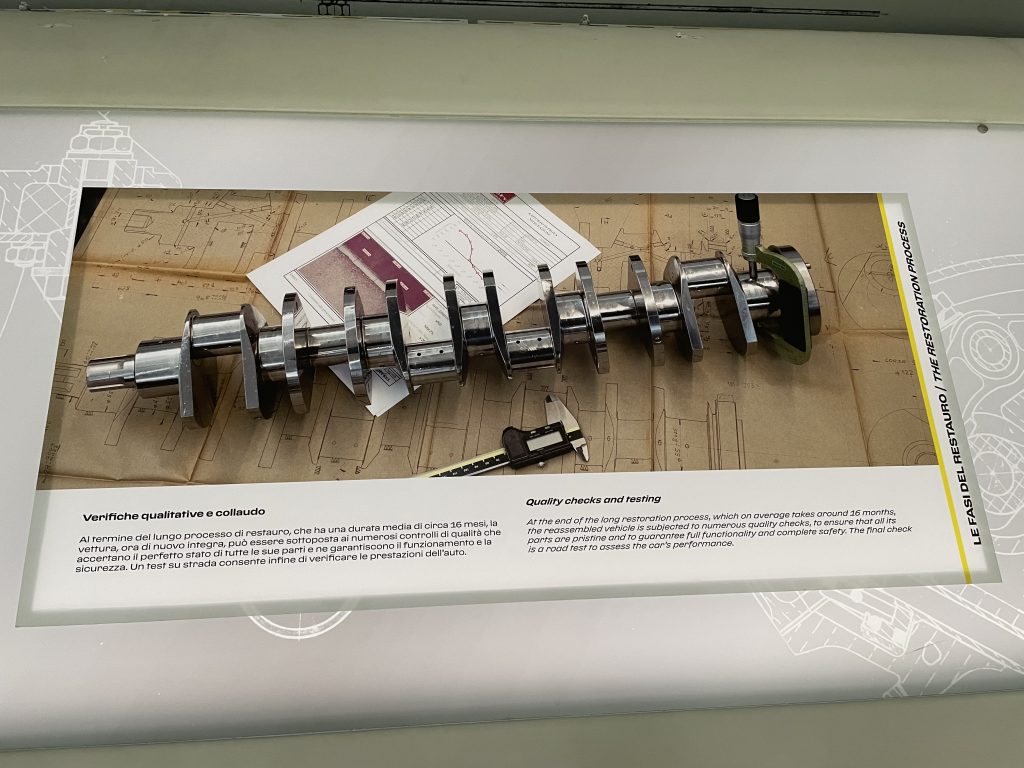
To guarantee the quality of the adjustments made to the classic cars (changes carried out only with parts that guarantee conformity with the original project), even in Ferrari there is a "qualitative checks and testing" phase, with the aim of guaranteeing the functioning and safety.
Why this little parenthesis in the world of Ferrari?
Compared to the IT world, the metaphor is the same: to avoid running into problems when the car is delivered, it is tested and checked to verify the car's performance. The exact same concept applies to software.
 English (UK)
 Italiano